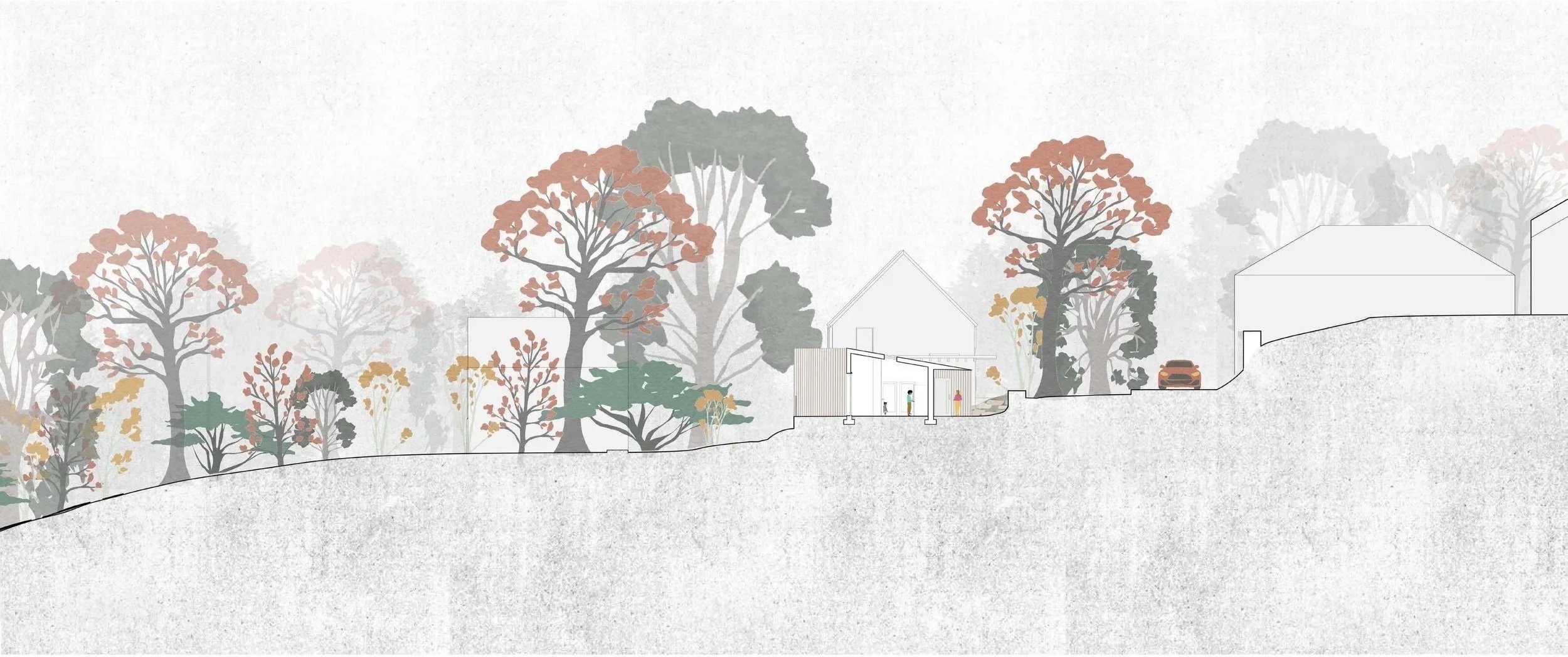
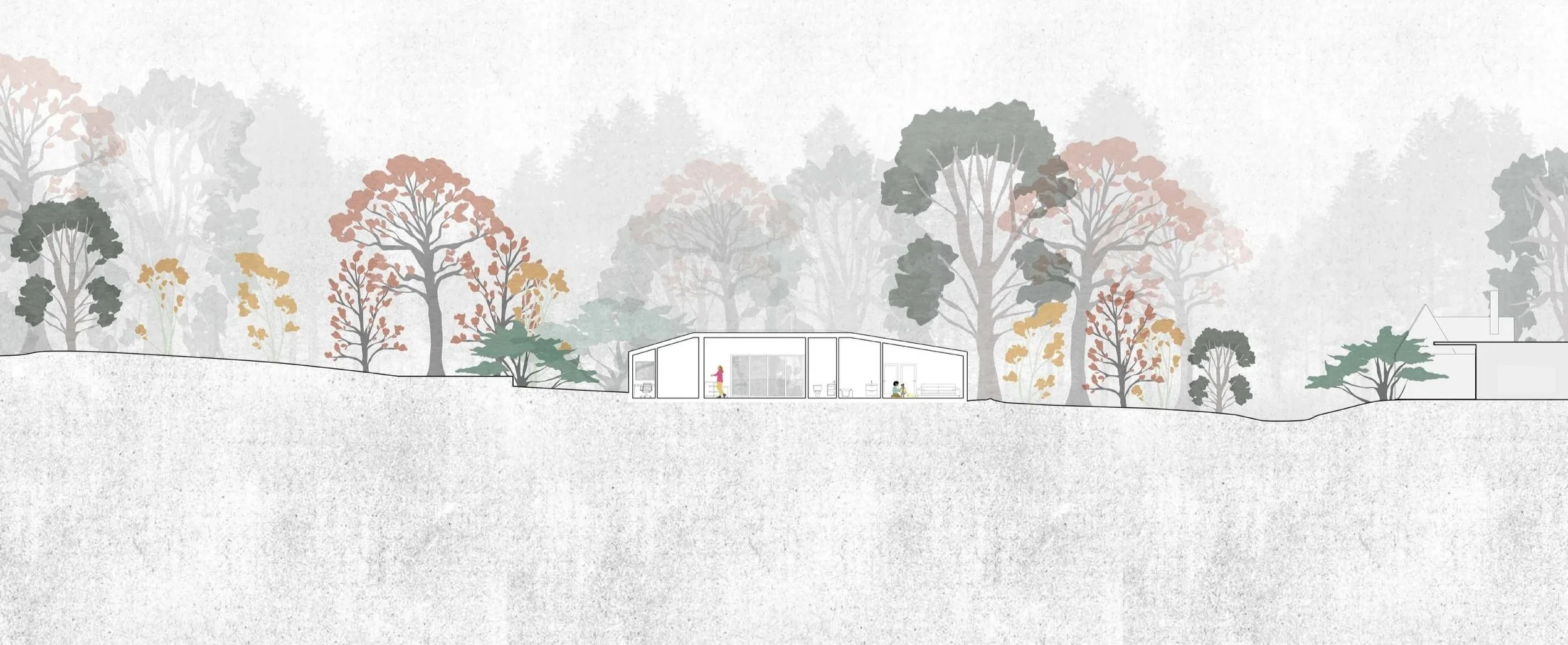
Asymmetrical Balance
building project, spring 2024
This was our group proposal’s for the 2024 Jim Vlock Housing Project, an annual design challenge that lets students experience the full cycle of architecture, from drafting to building. We were asked to create a small dual-family dwelling on an empty plot of land in the nearby town of Fair Haven, Connecticut. Two teachers from the Friends daycare center across the street would live in this home rent-free after it was completed.
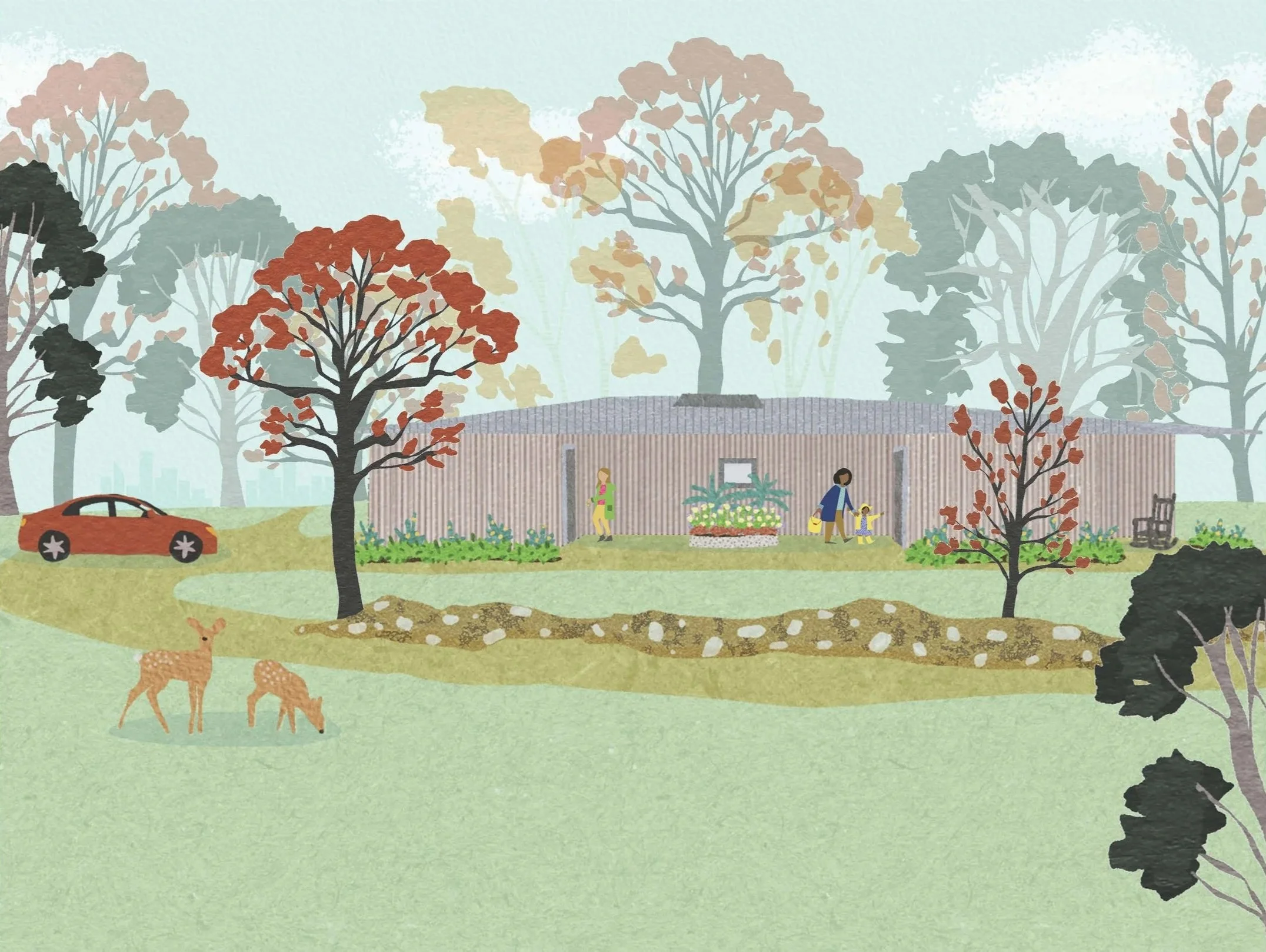
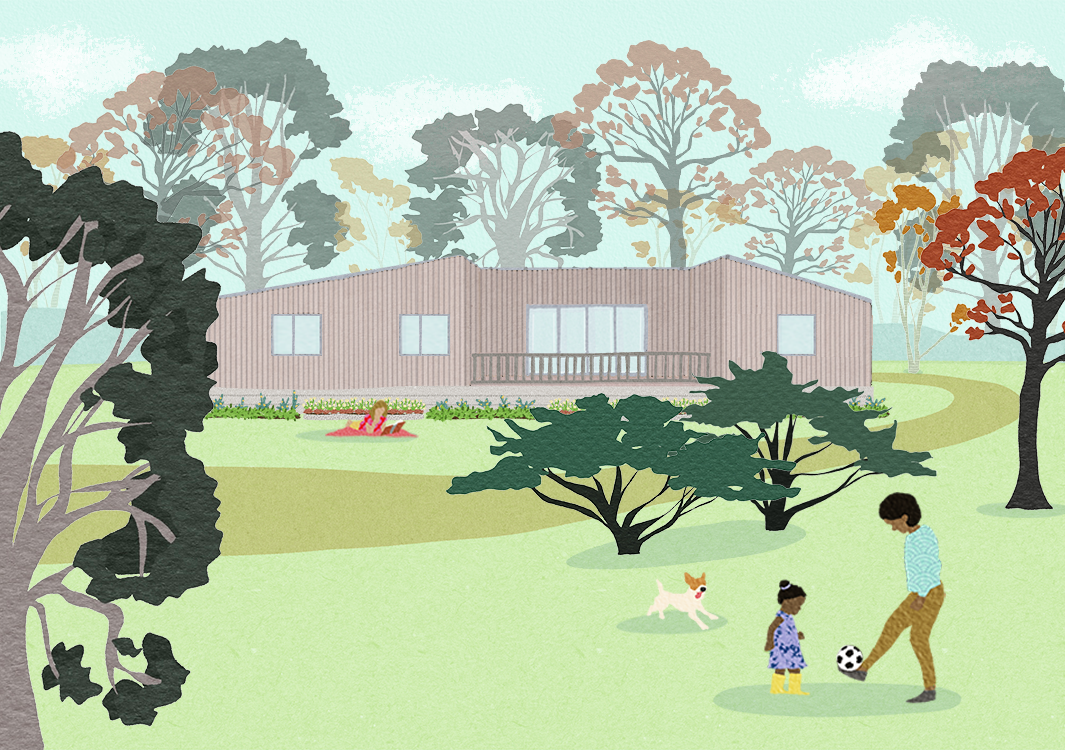
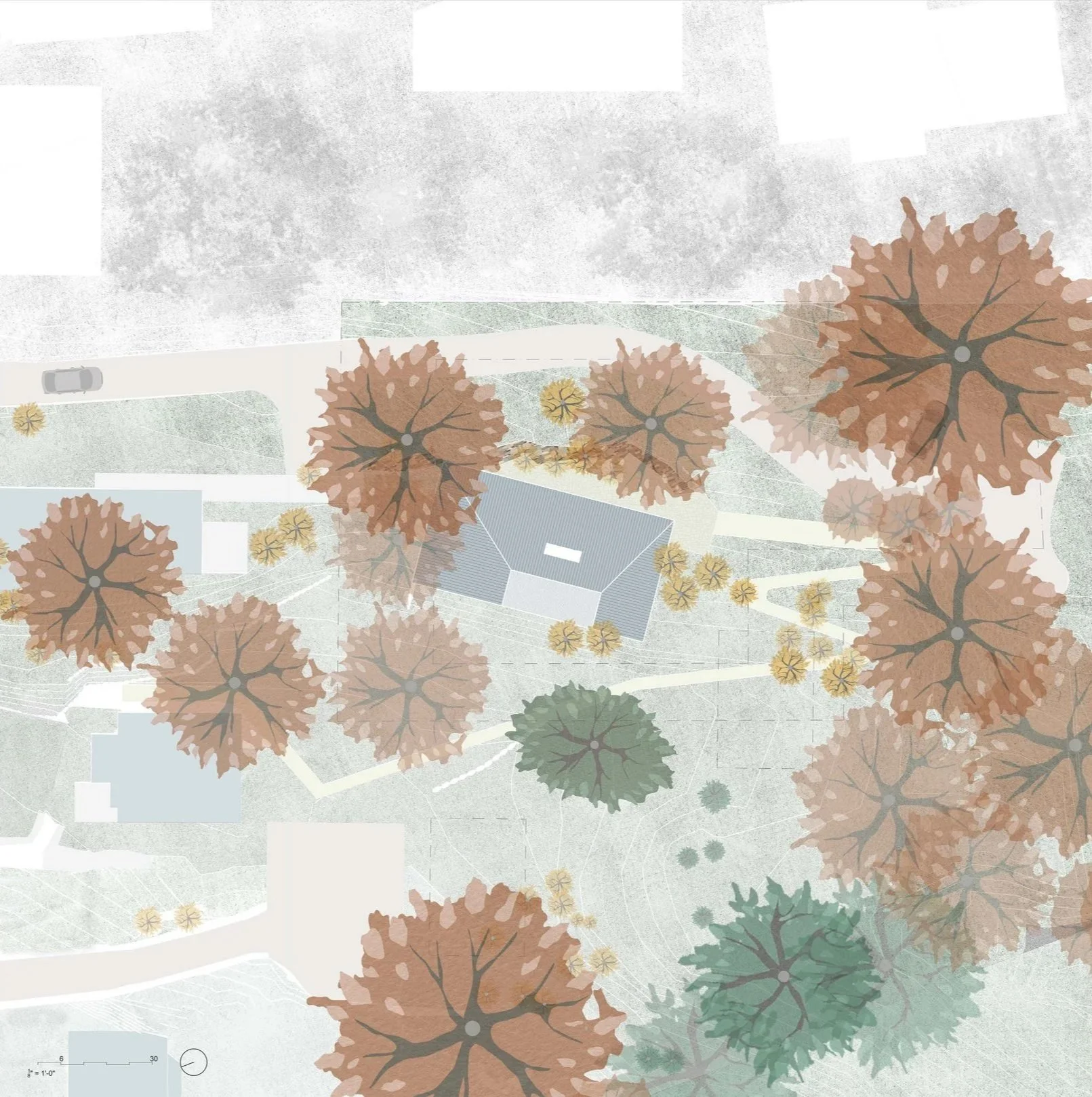
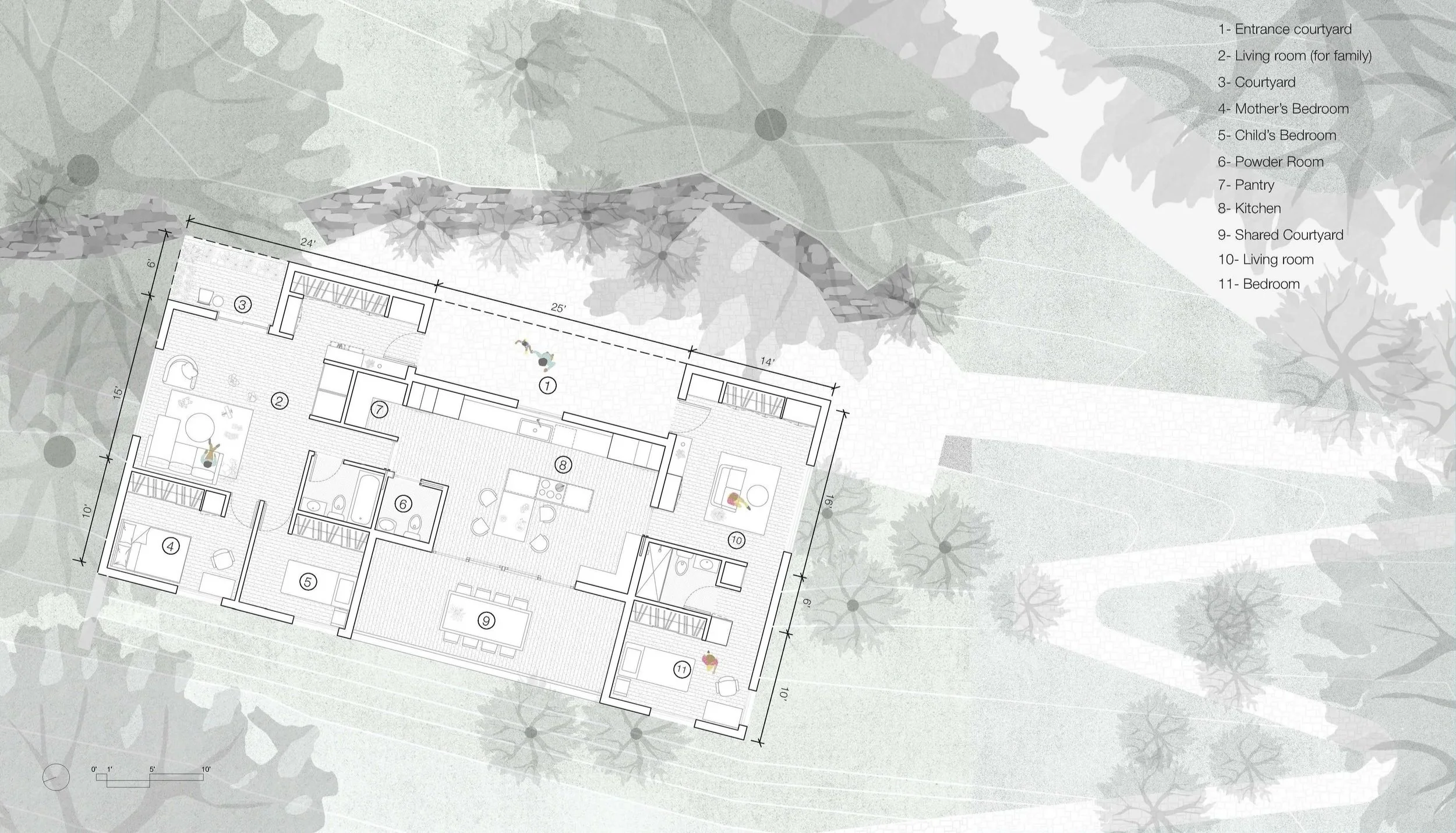
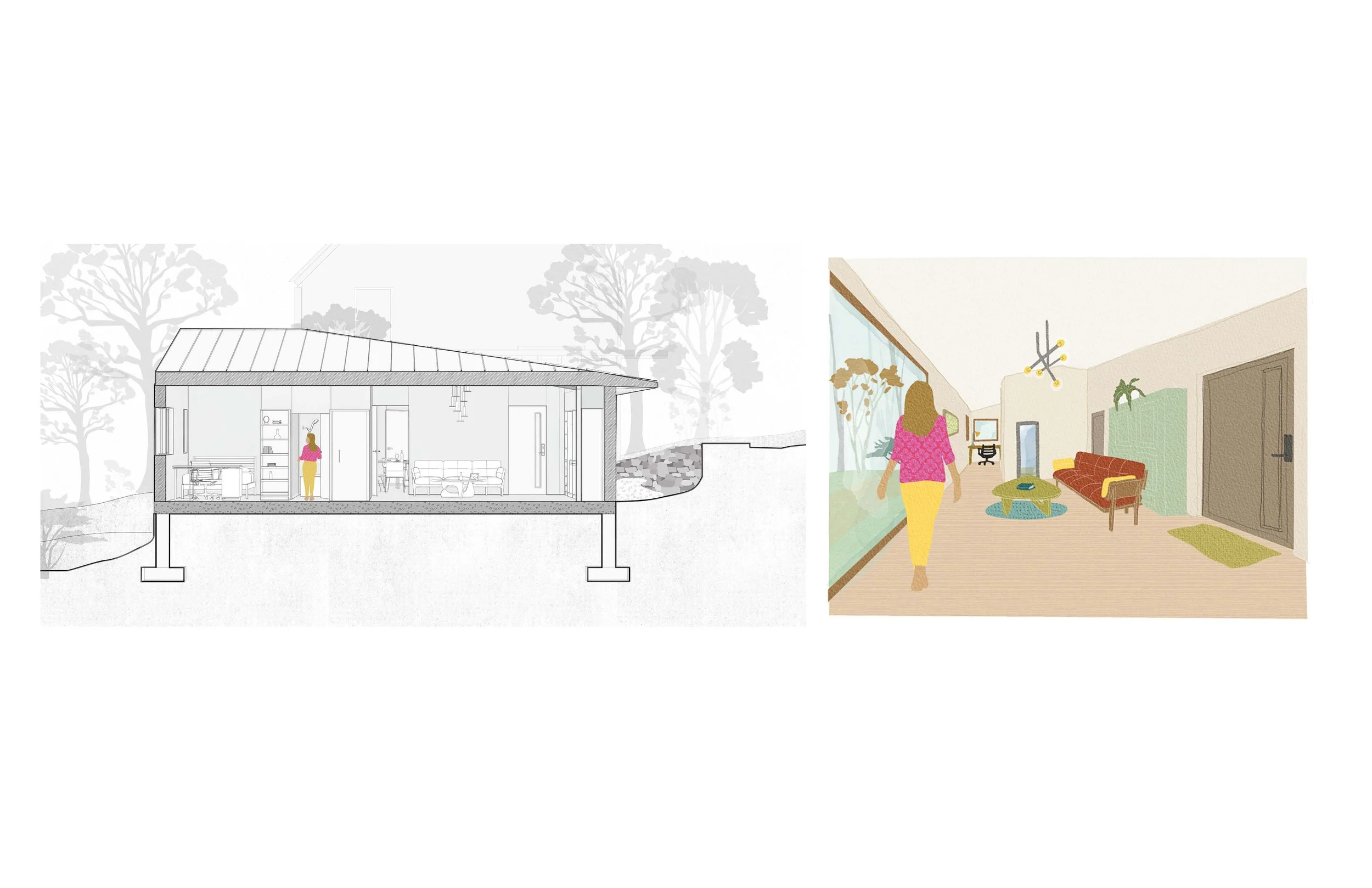
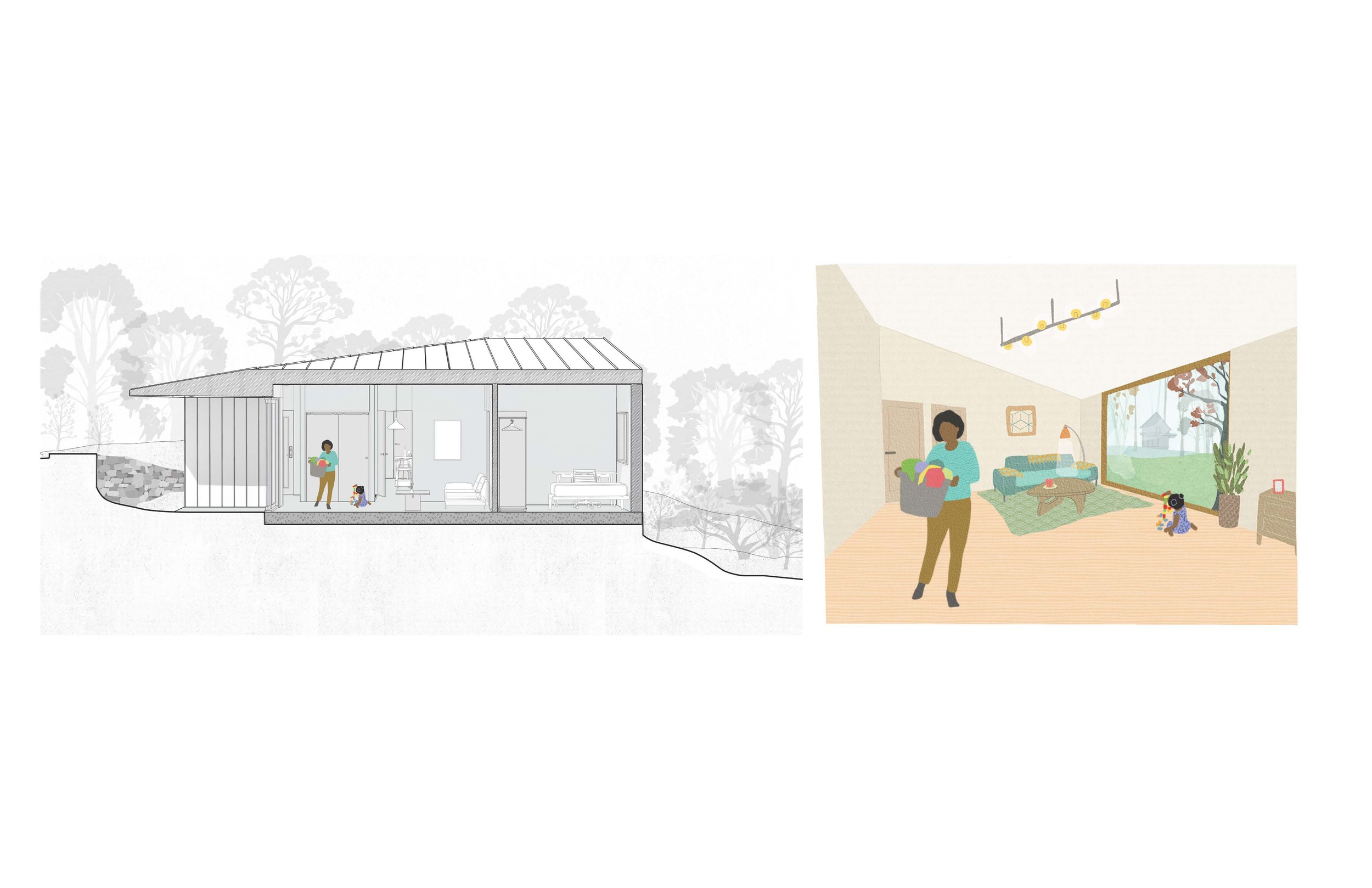
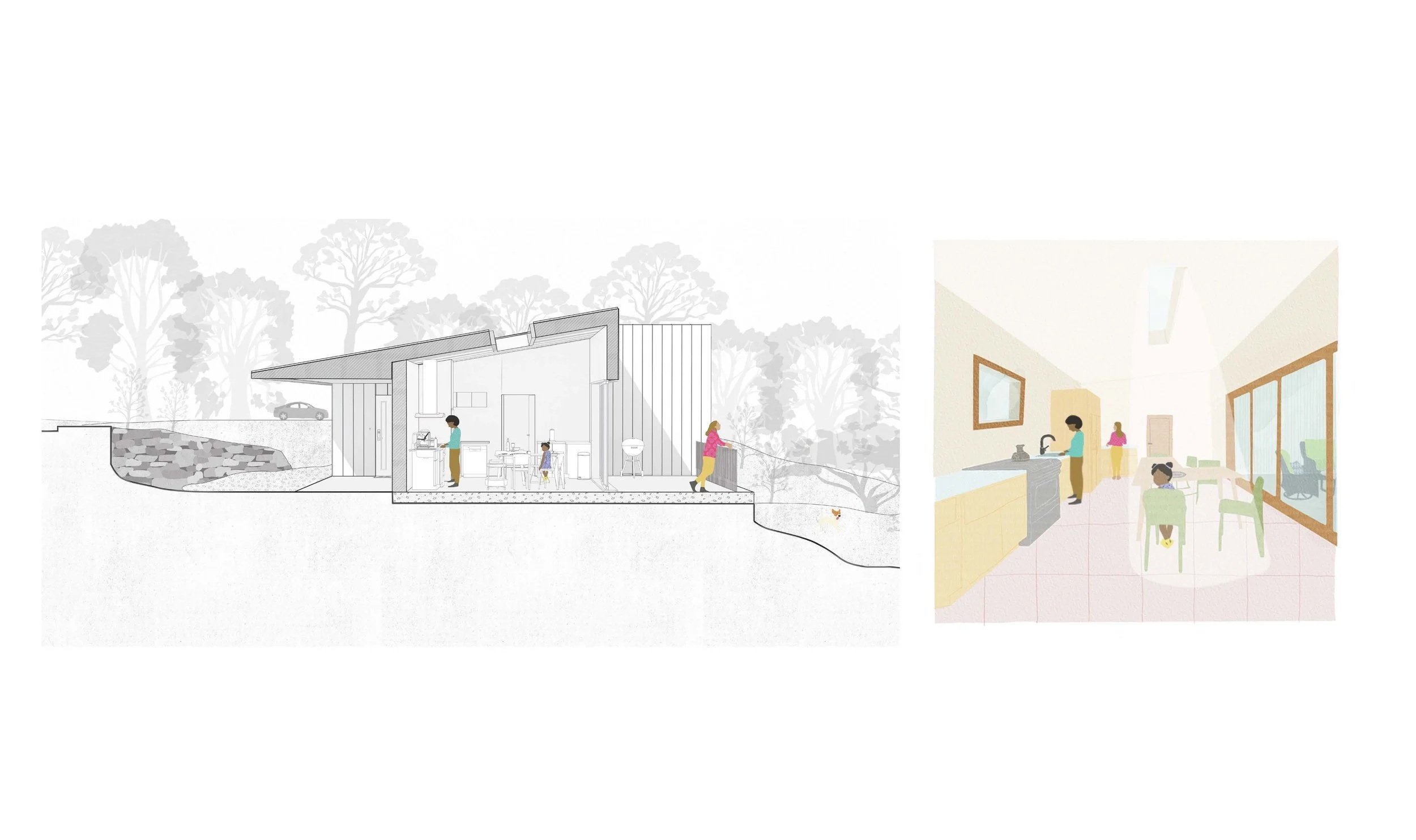
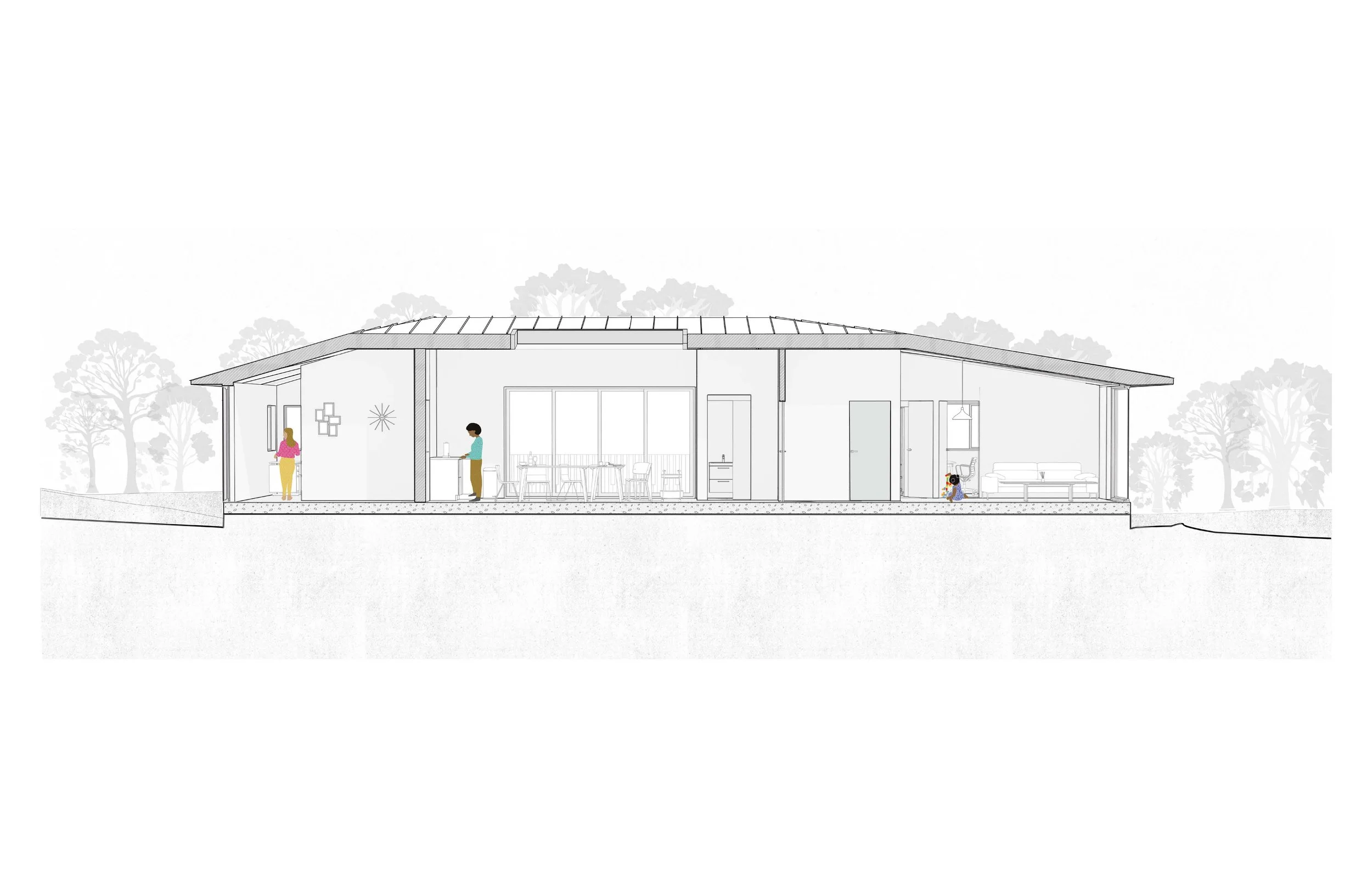
After closely developing and redeveloping our scheme over the semester, we arrived at a solution: two wings joined together by a common kitchen core. The coexistence of two families is choreographed by boundaries, both indoor and outdoor, seen and unseen. Our concept of indoor and outdoor rooms provide a balance of private ritual and public togetherness.
The inset kitchen, wedged between two sides, creates an entrance court and an elevated rear patio overlooking the common area (pictured above). There are floor to ceiling windows that look into the more leisurely parts of the home and show panoramic views of nature outside, while the punched-in windows at the back capture smaller, discreet views of the surroundings. The roof is a taut skin, meeting the walls right at the corner, like a knife-edge. A warm wood hugs the house’s facade, and a row of birches and red oak greet visitors when they walk in. Nature and nurture work together to create a home.
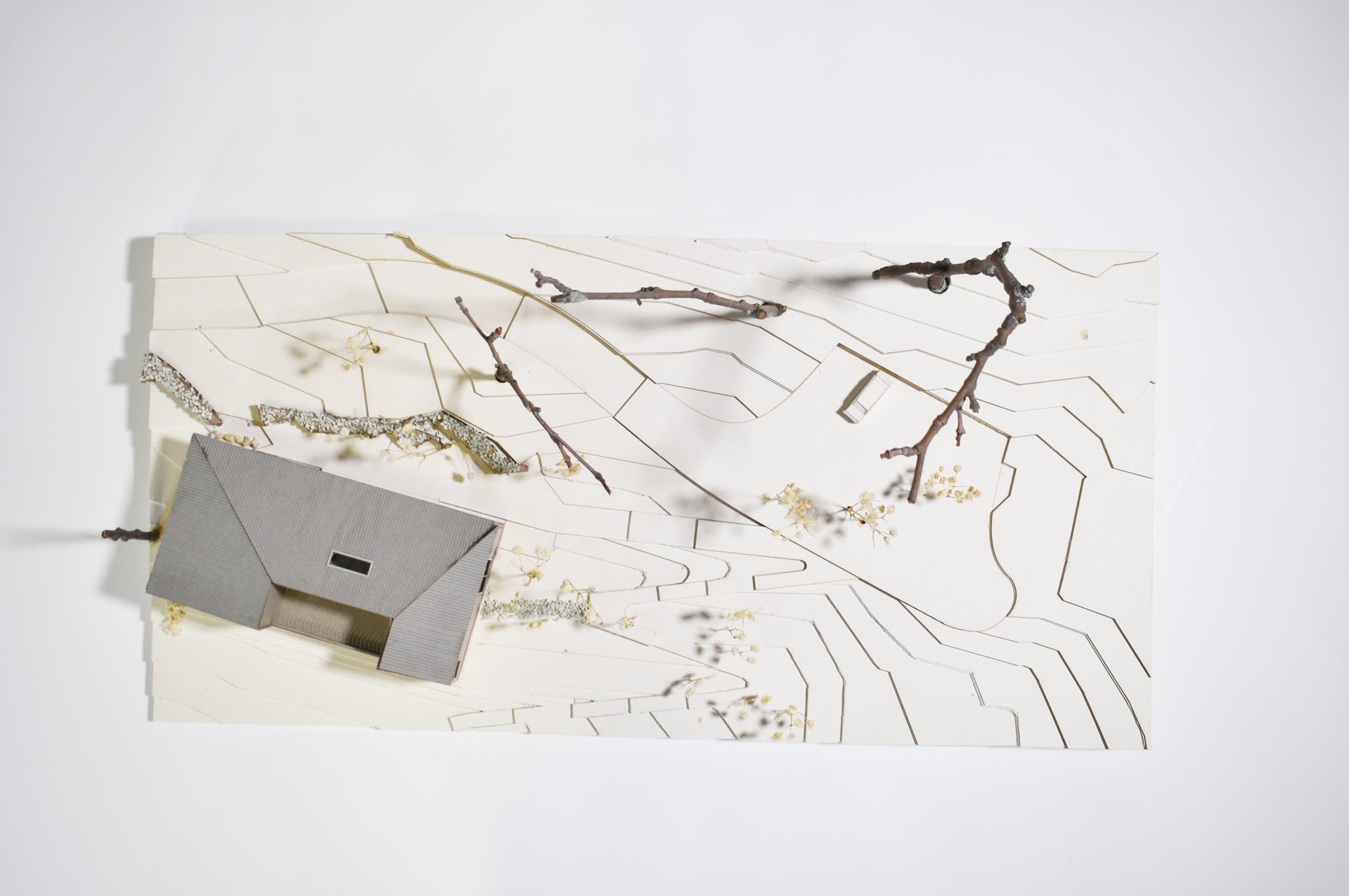
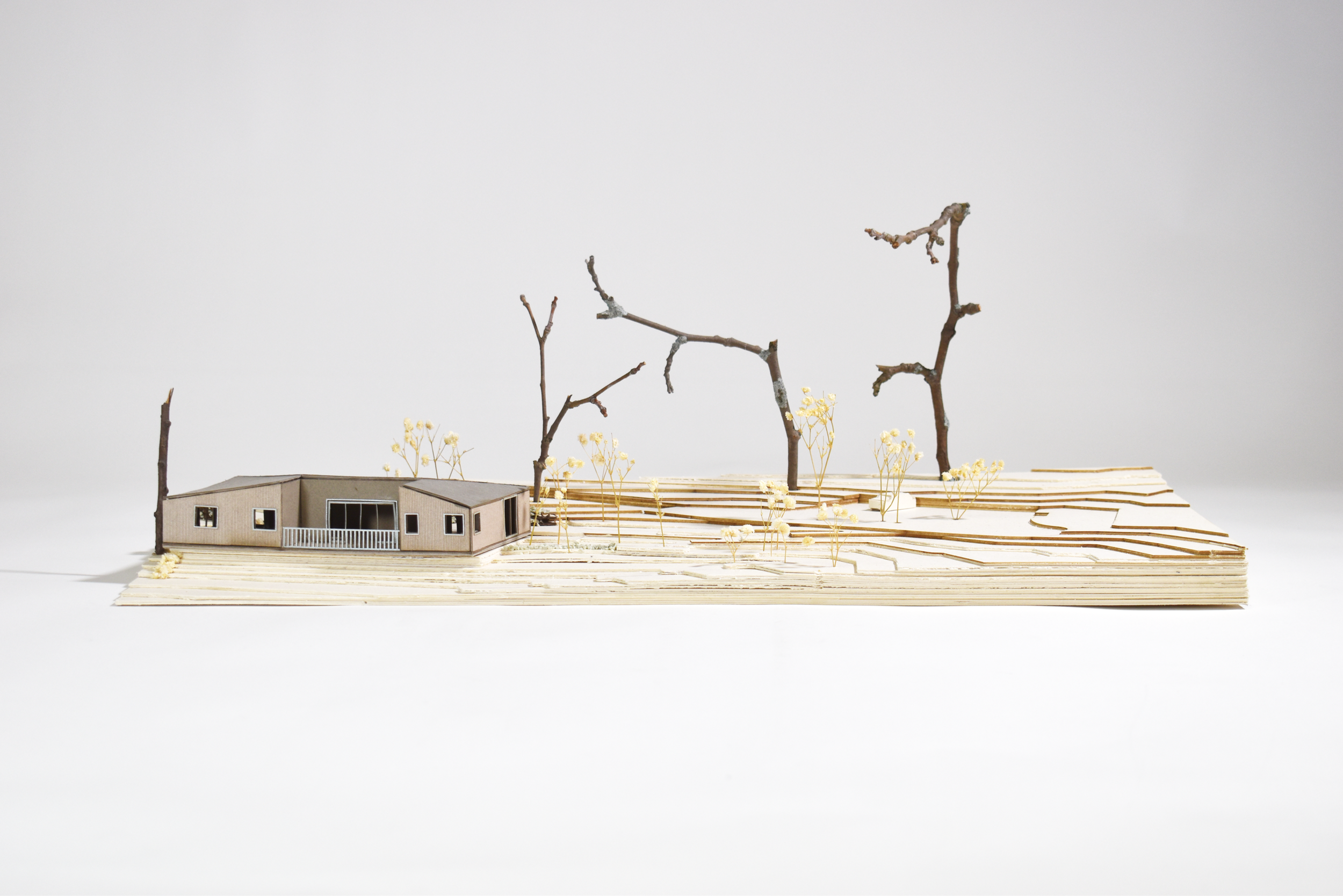
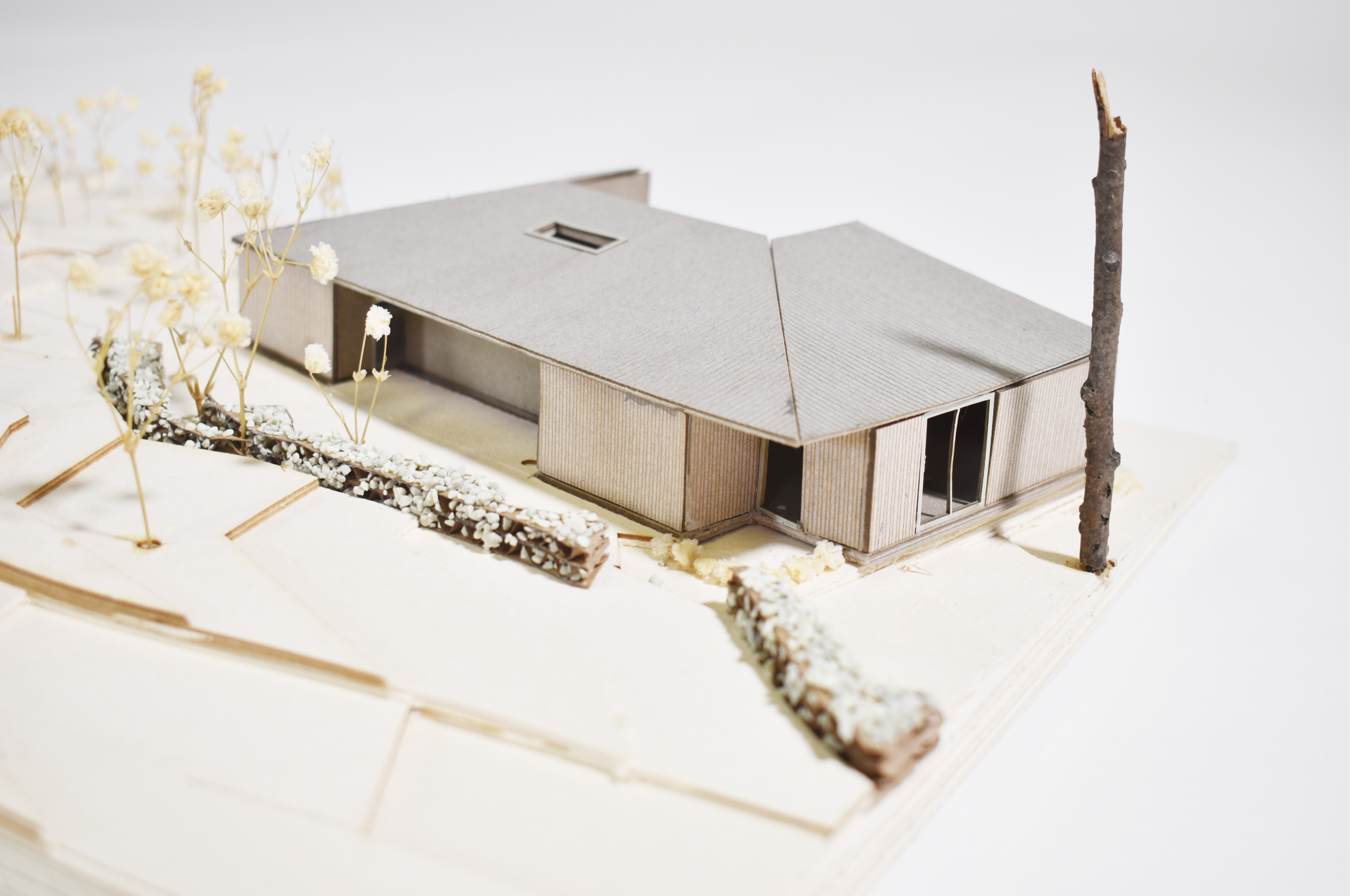
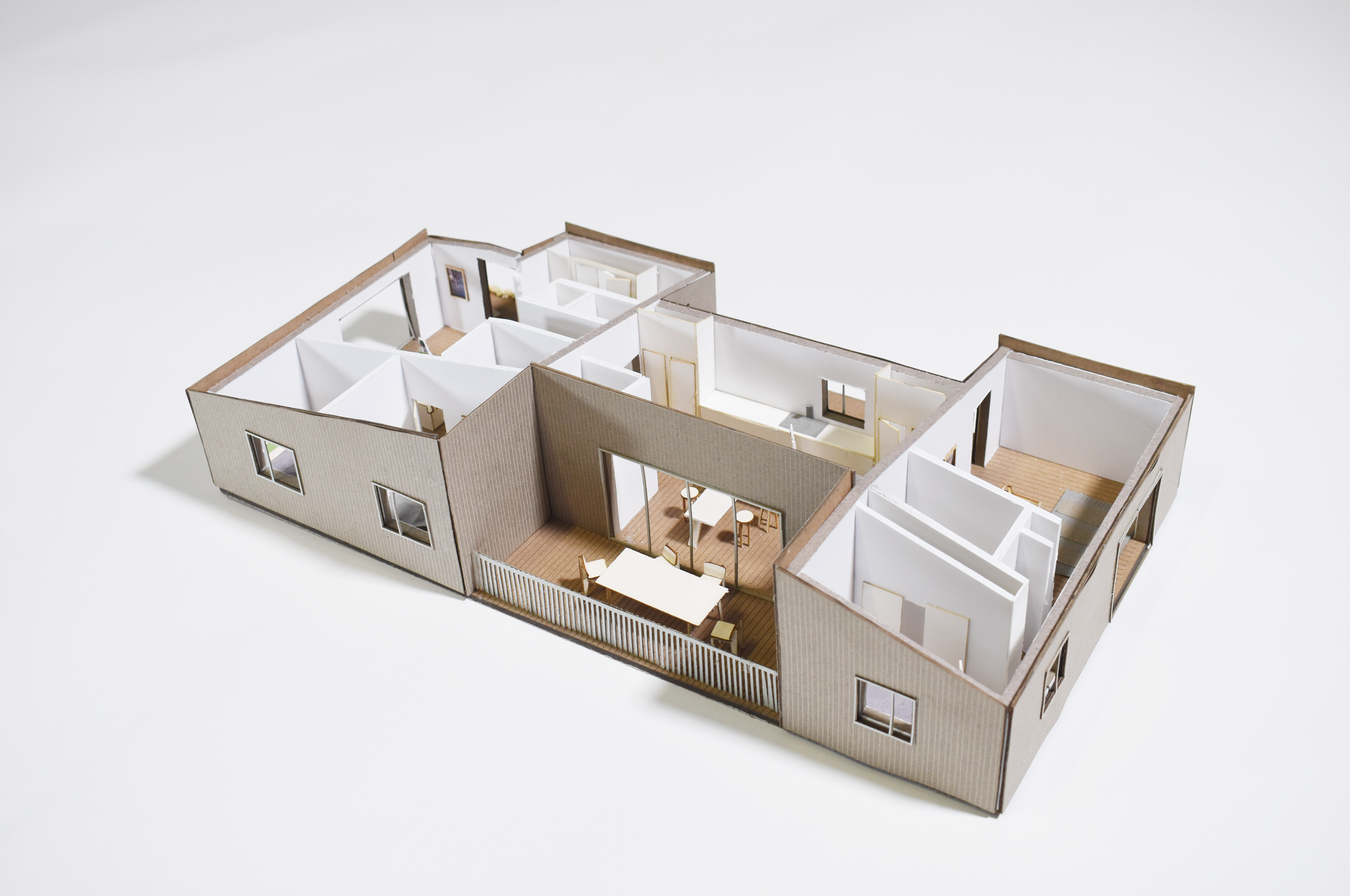
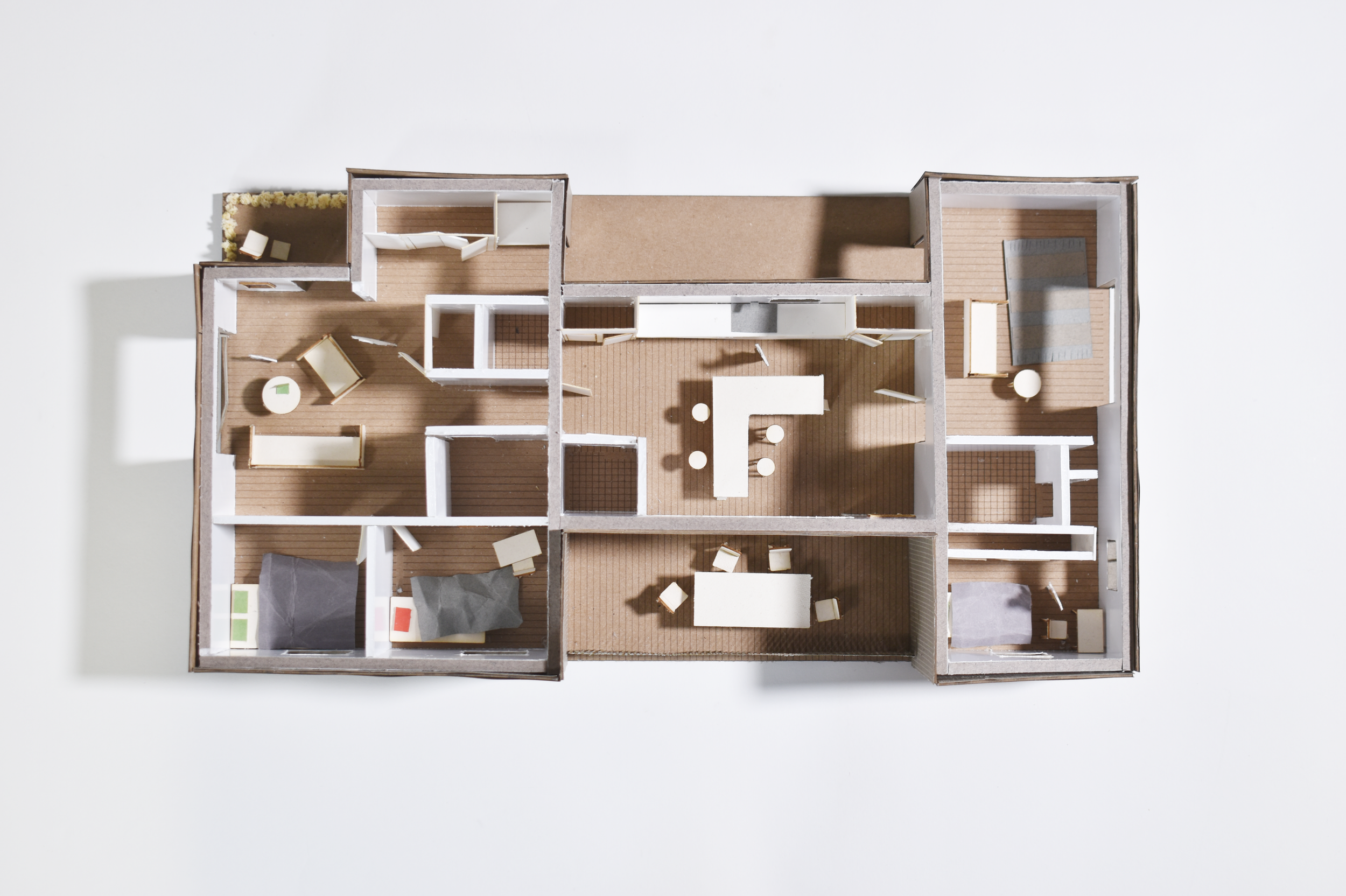
A dual dwelling recognizes that boundaries are not just limits – they become something more on the other side. An asymmetrical balance is achieved through a pattern of solitary and shared space throughout the house, flowing from the interior to the exterior. Corners become courtyards and walls become thresholds; gentle interactions on the inside are choreographed and framed by the outdoor landscape. It is a house settled into a hill.
Instructor Adam Hopfner
Partners Aigerim Khamar, Mehmet Rizaoglu, Elis Huang, Fah Keerasuntonpong