Environmental Design
elective, fall 2024
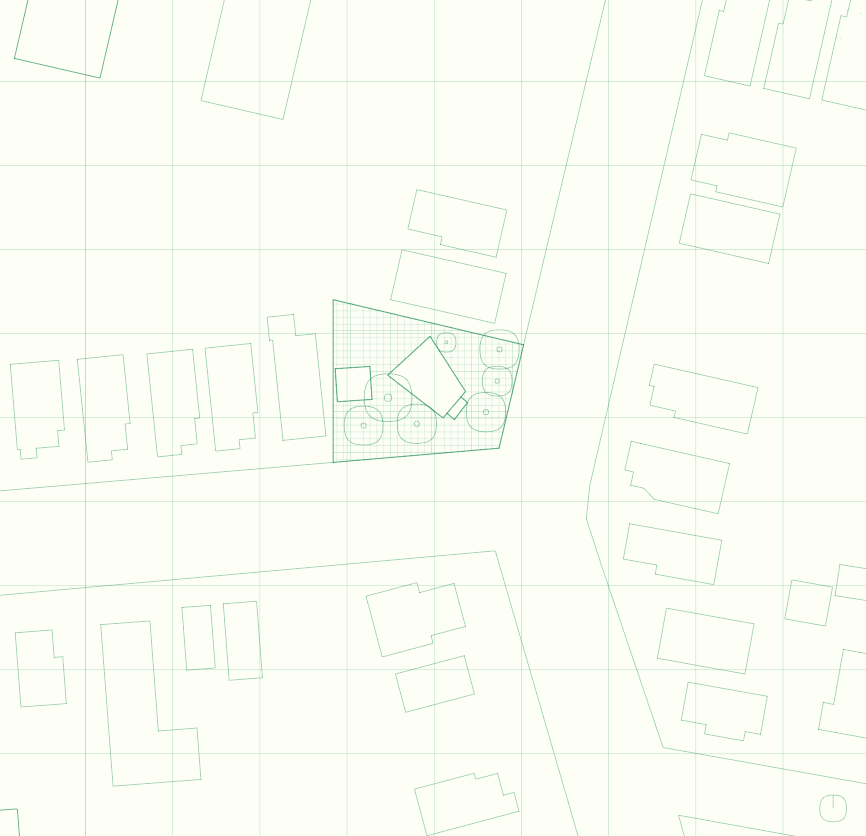
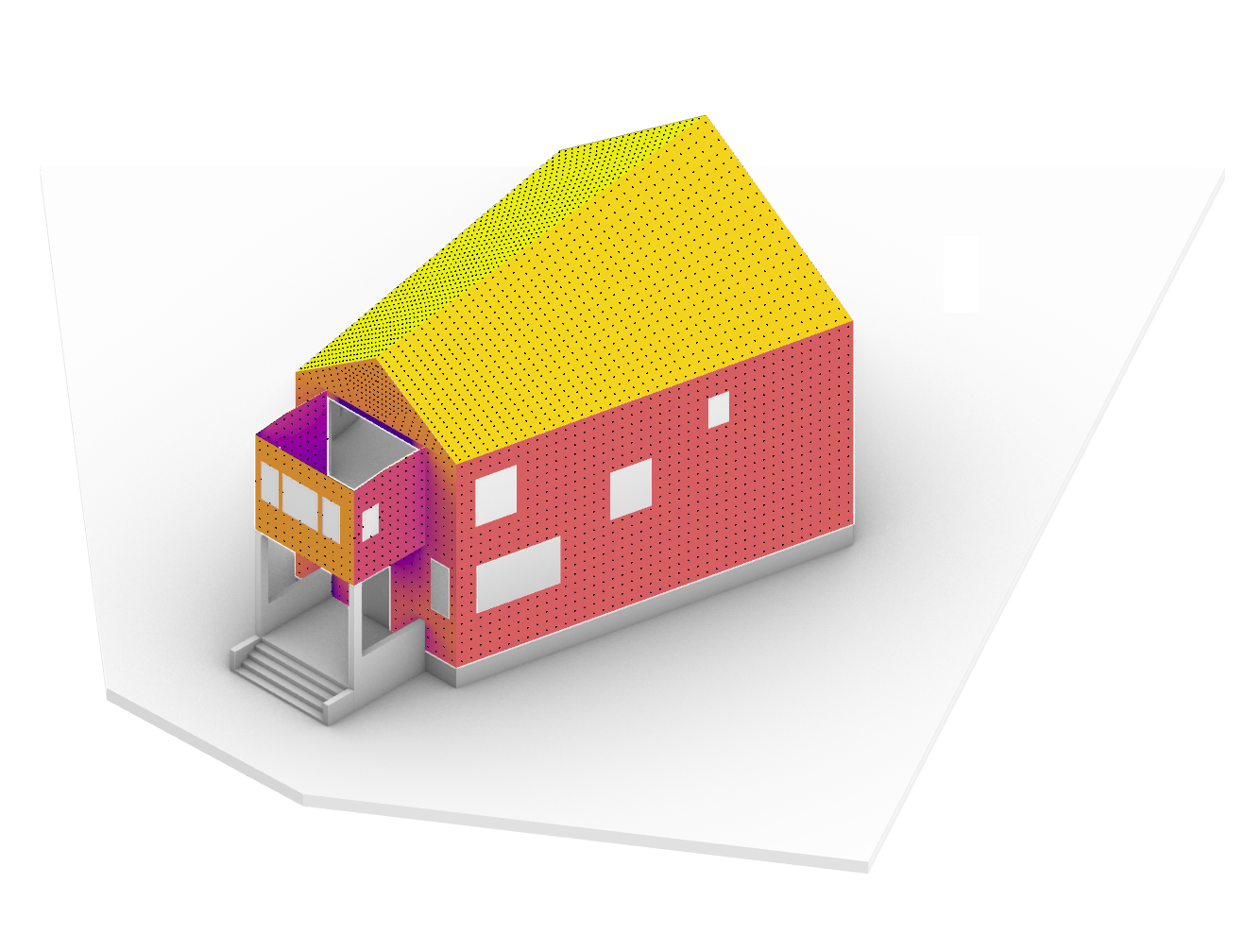
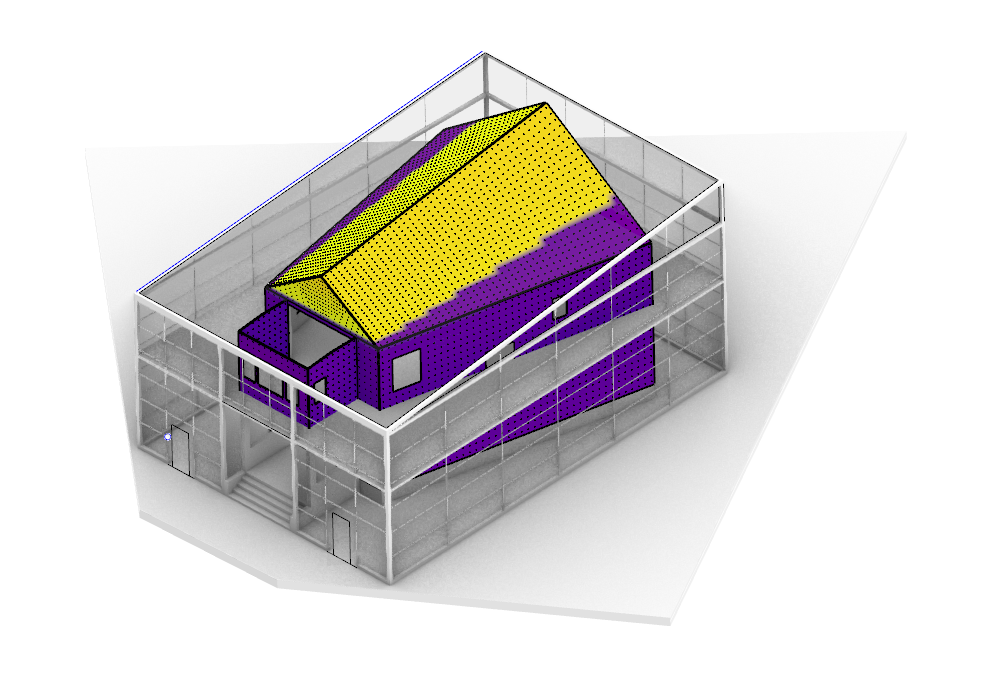
This project was nicknamed “The Wedge,” which is in reference to the trapezoidal shape of a New Haven house we were tasked with modifying to meet the Living Building Challenge standards. We completed the “wedge” by building an outer square skin of glass.
We proposed building a co-op doubling as a restaurant on the ground floor and a private residence on the second floor. A basement fungiculture lab produced food for customers, and the residual food waste was converted into energy using a biomass combustion tank. Solar panels on the southwest corner of the roof maximized solar gains and powered the house’s electricity. The mushroom cultivation was turned into myceliun, a material used in the restaurant’s furniture and packaging.
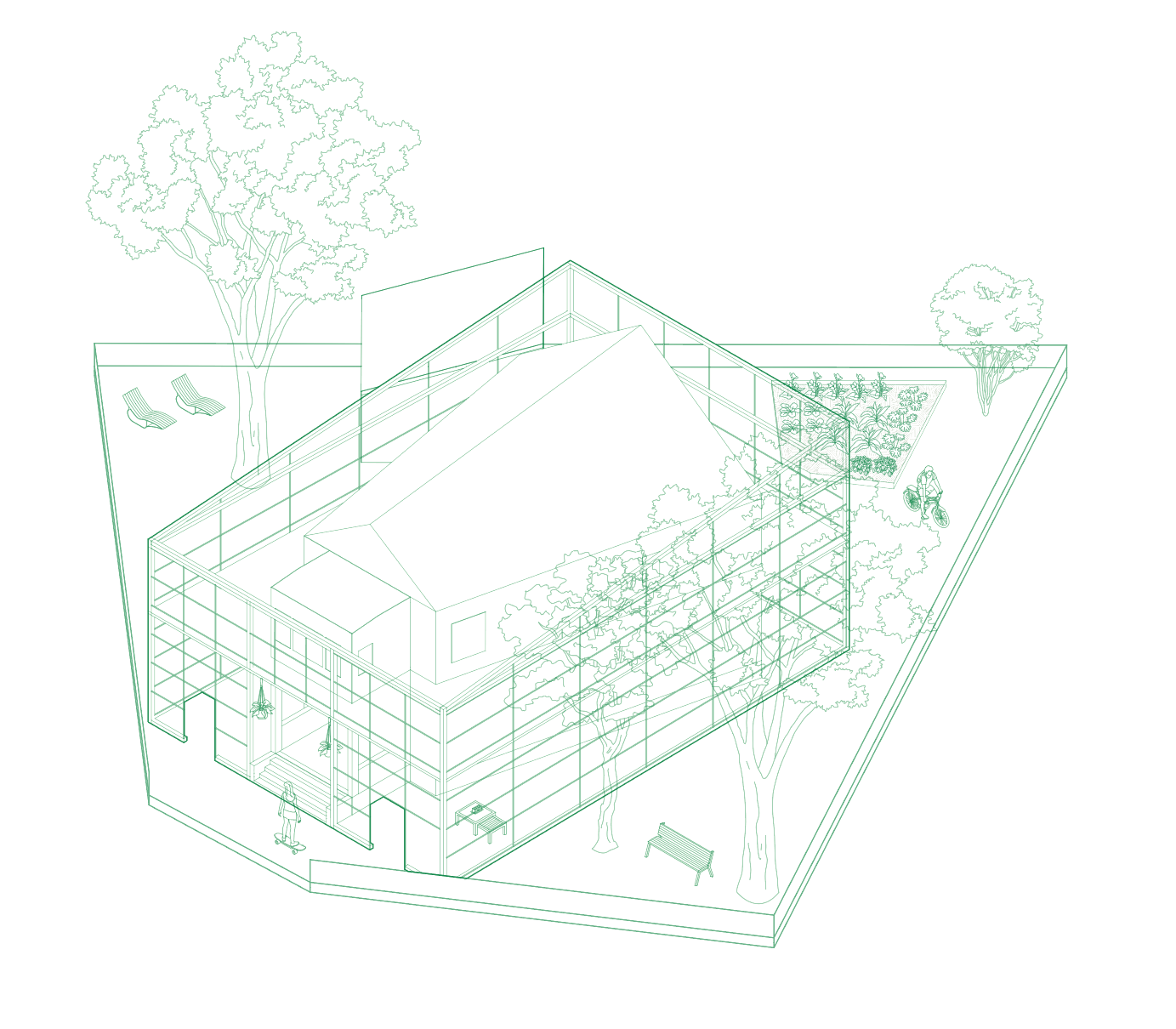
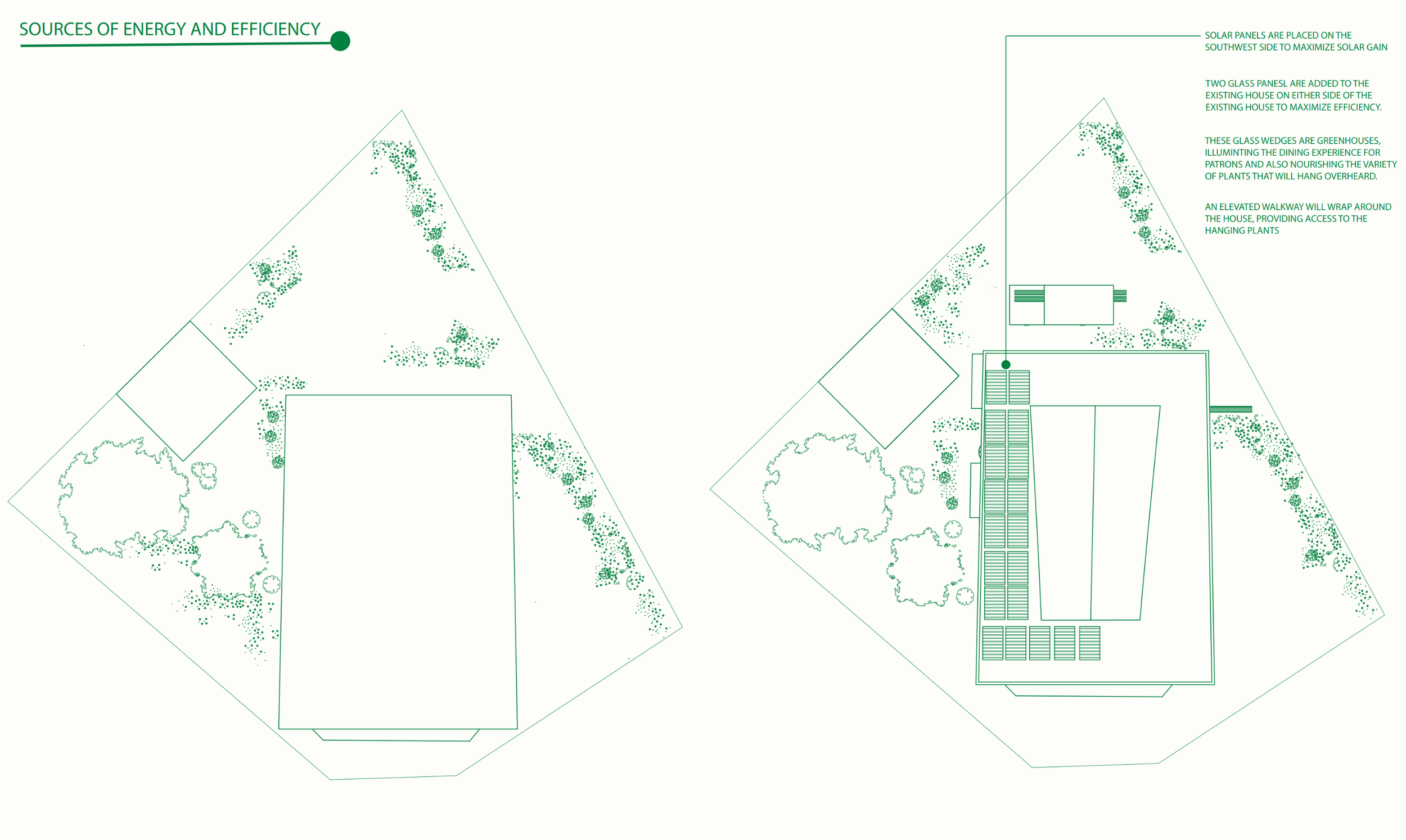
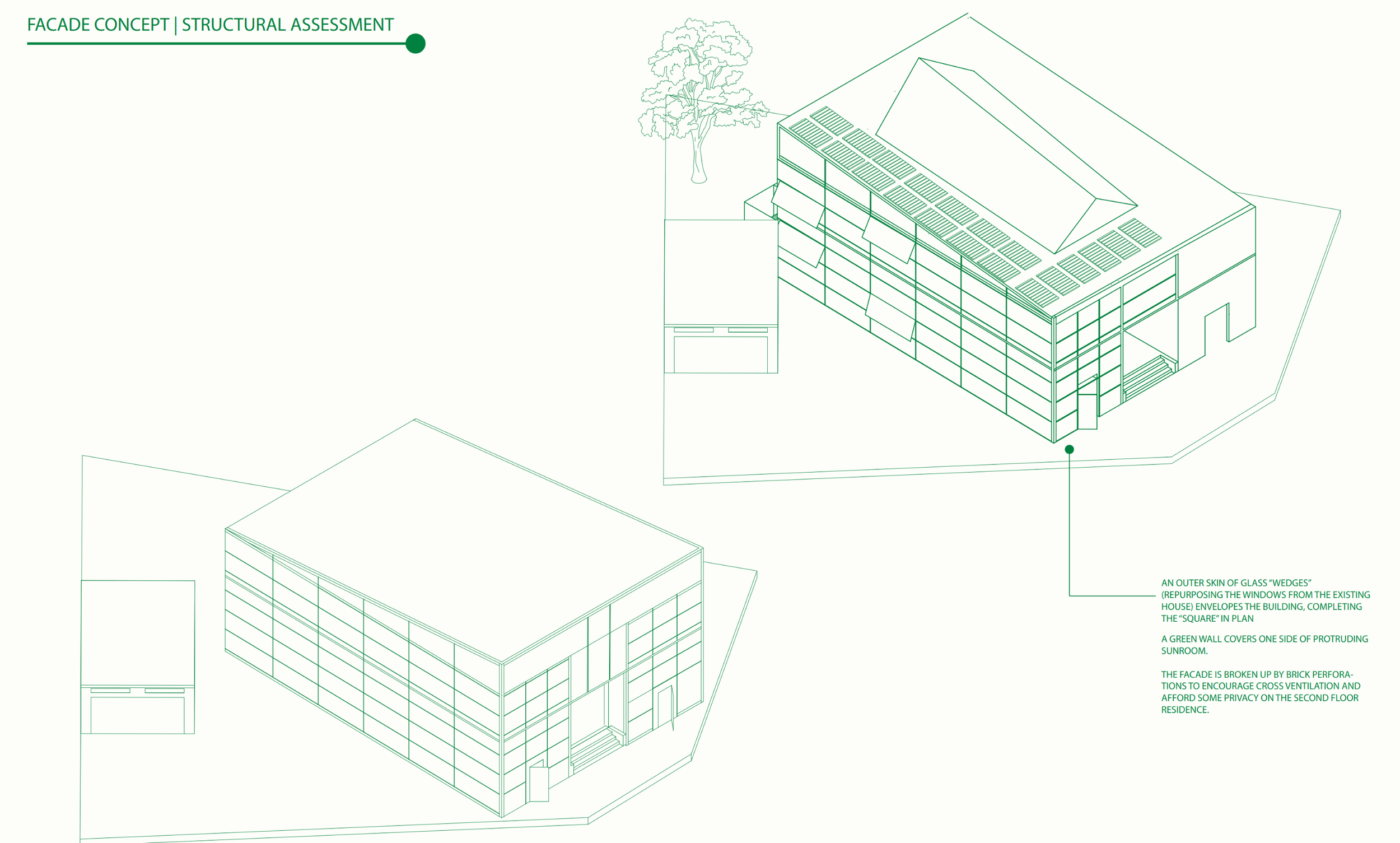
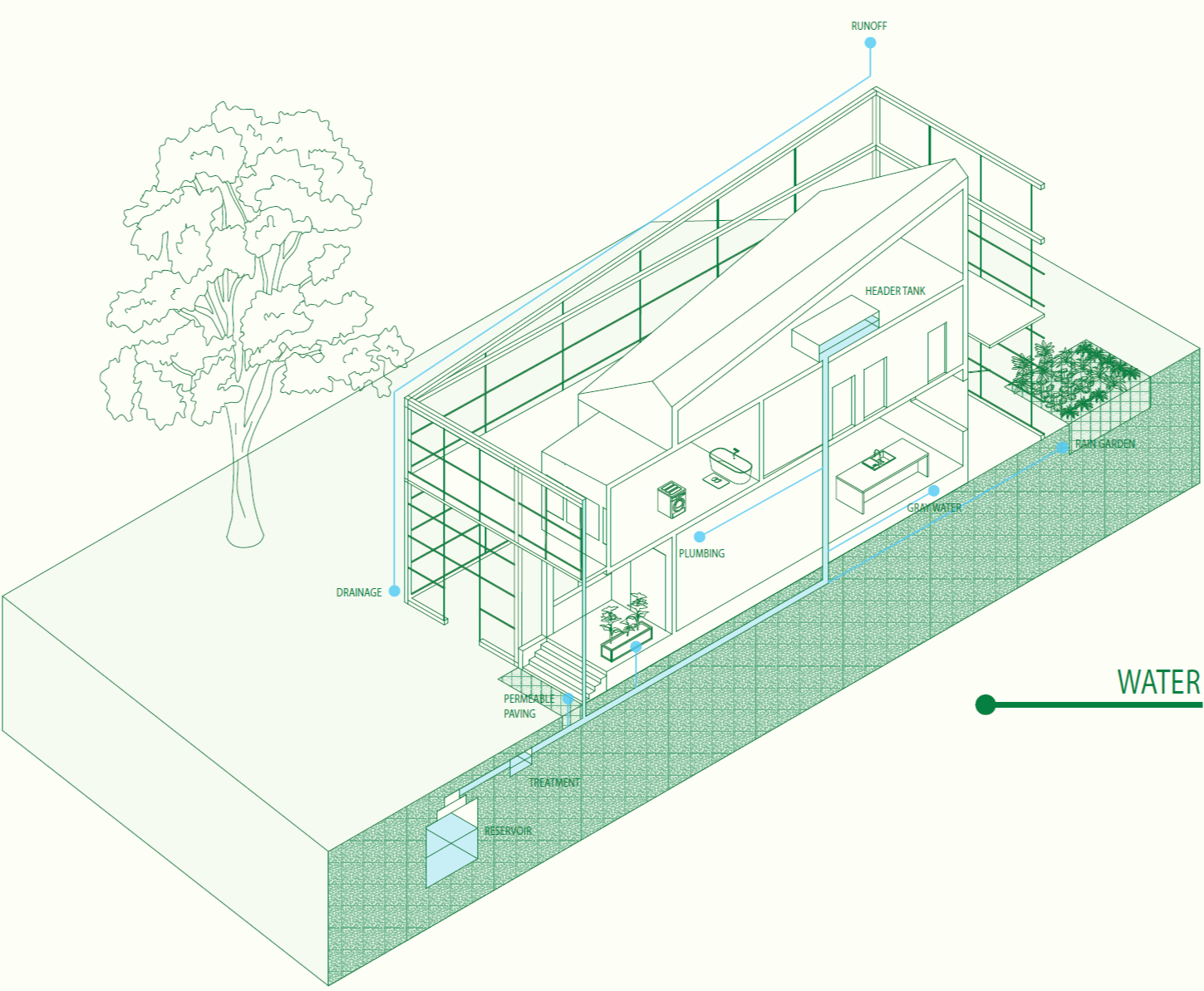
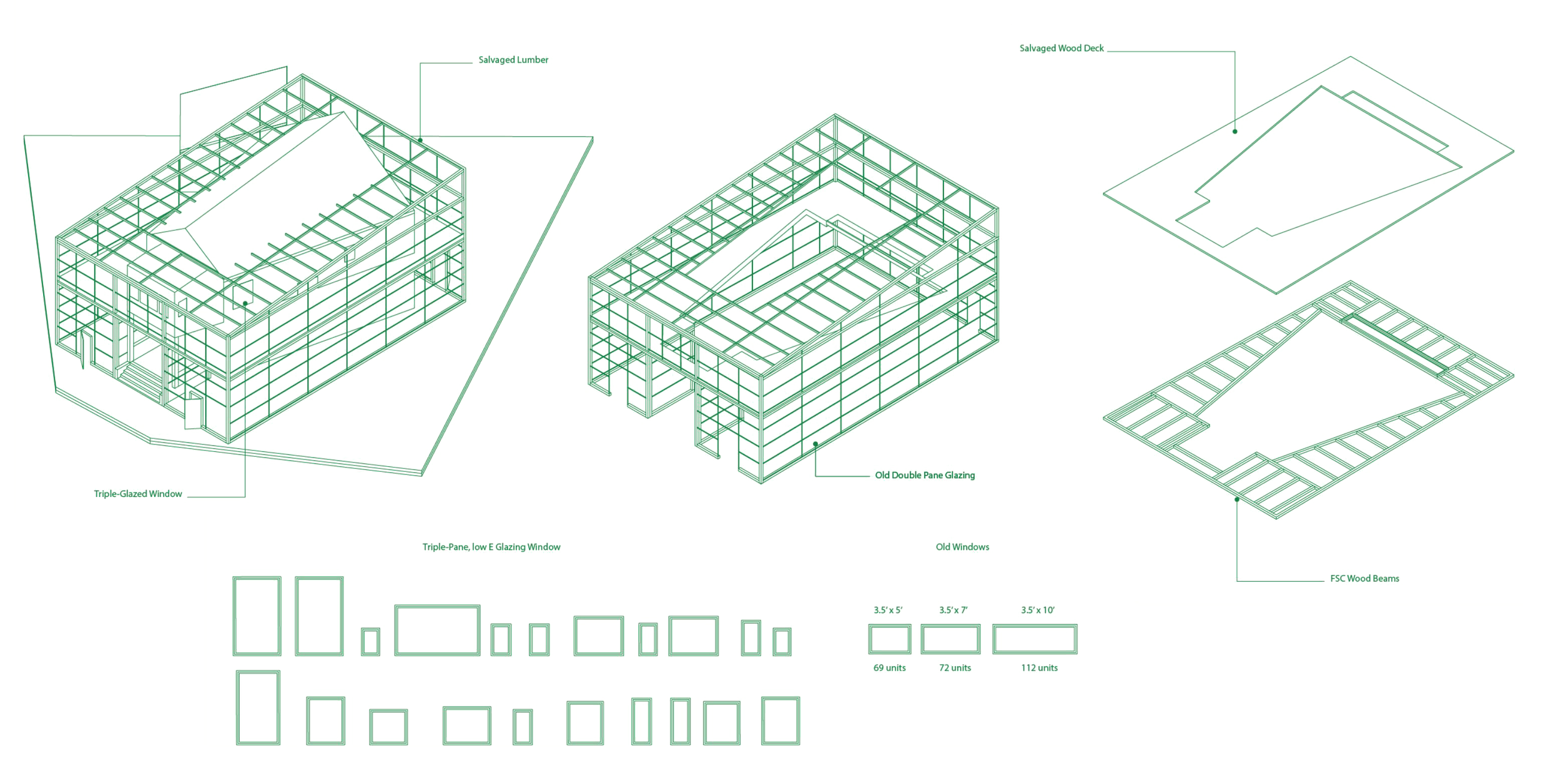
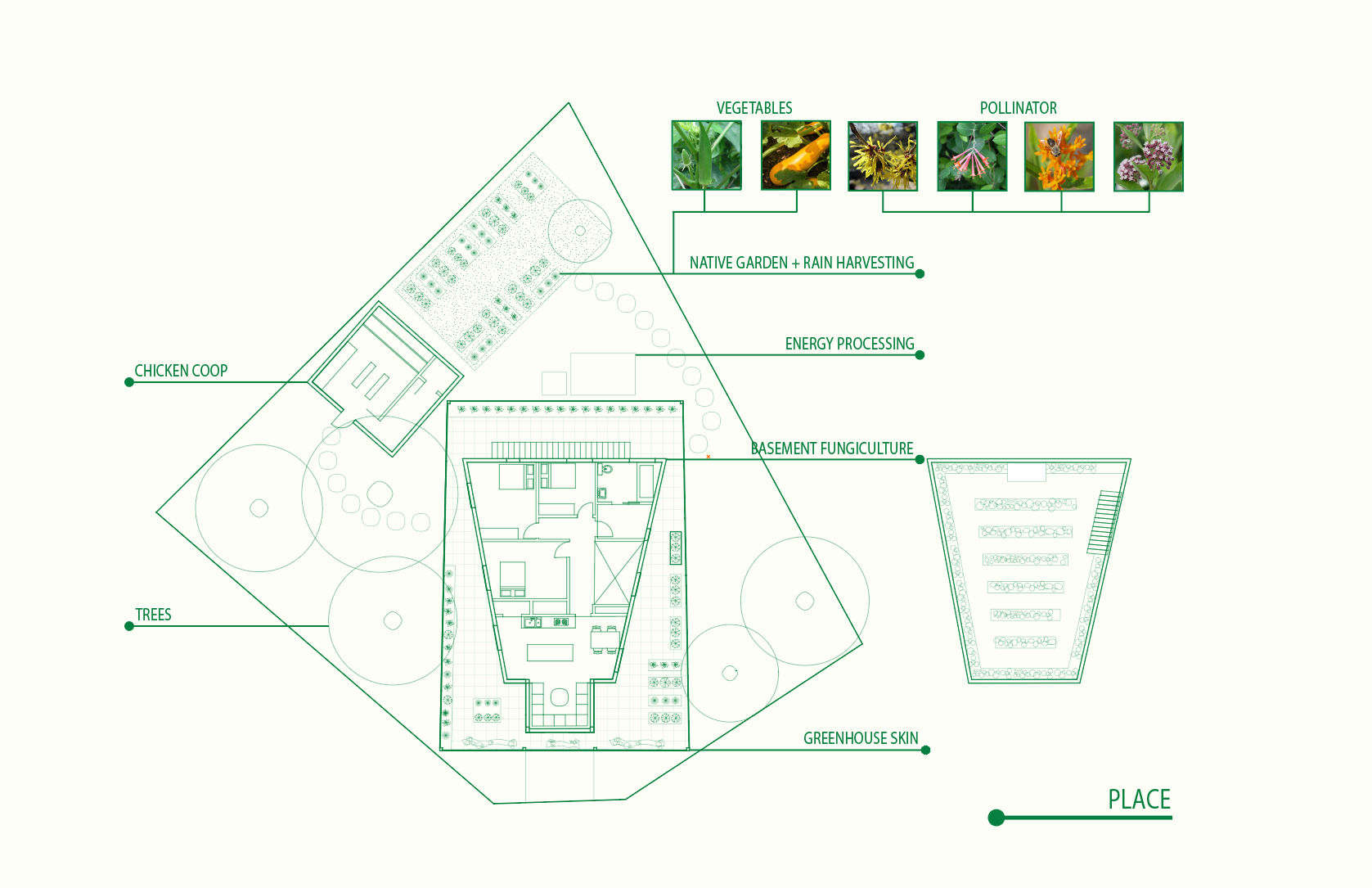
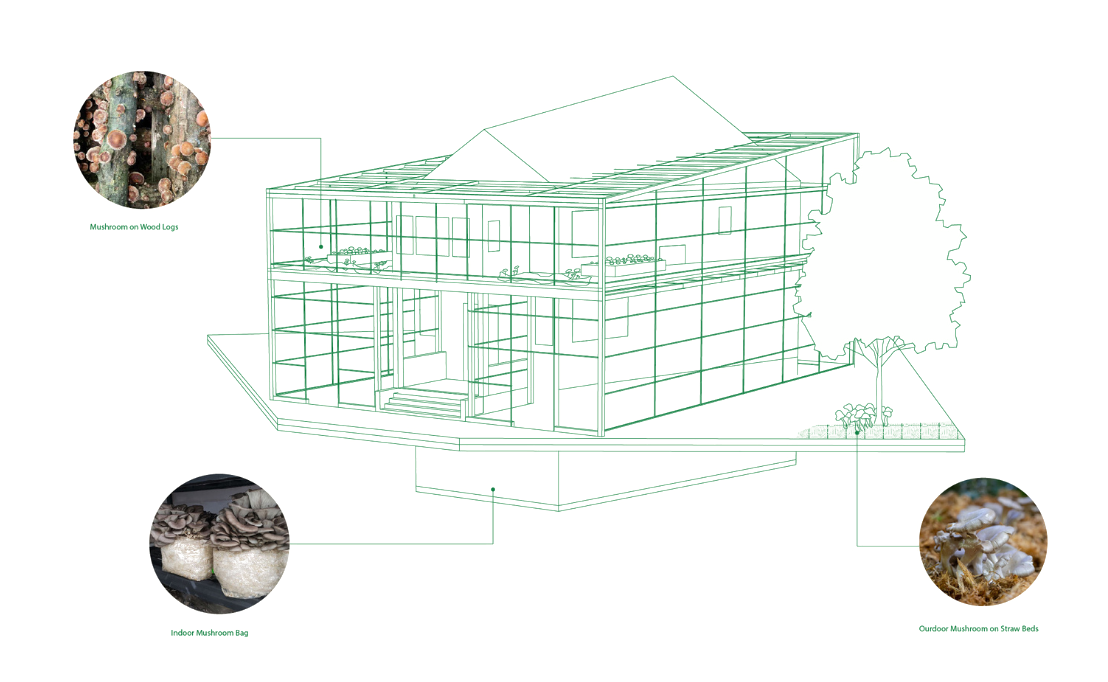
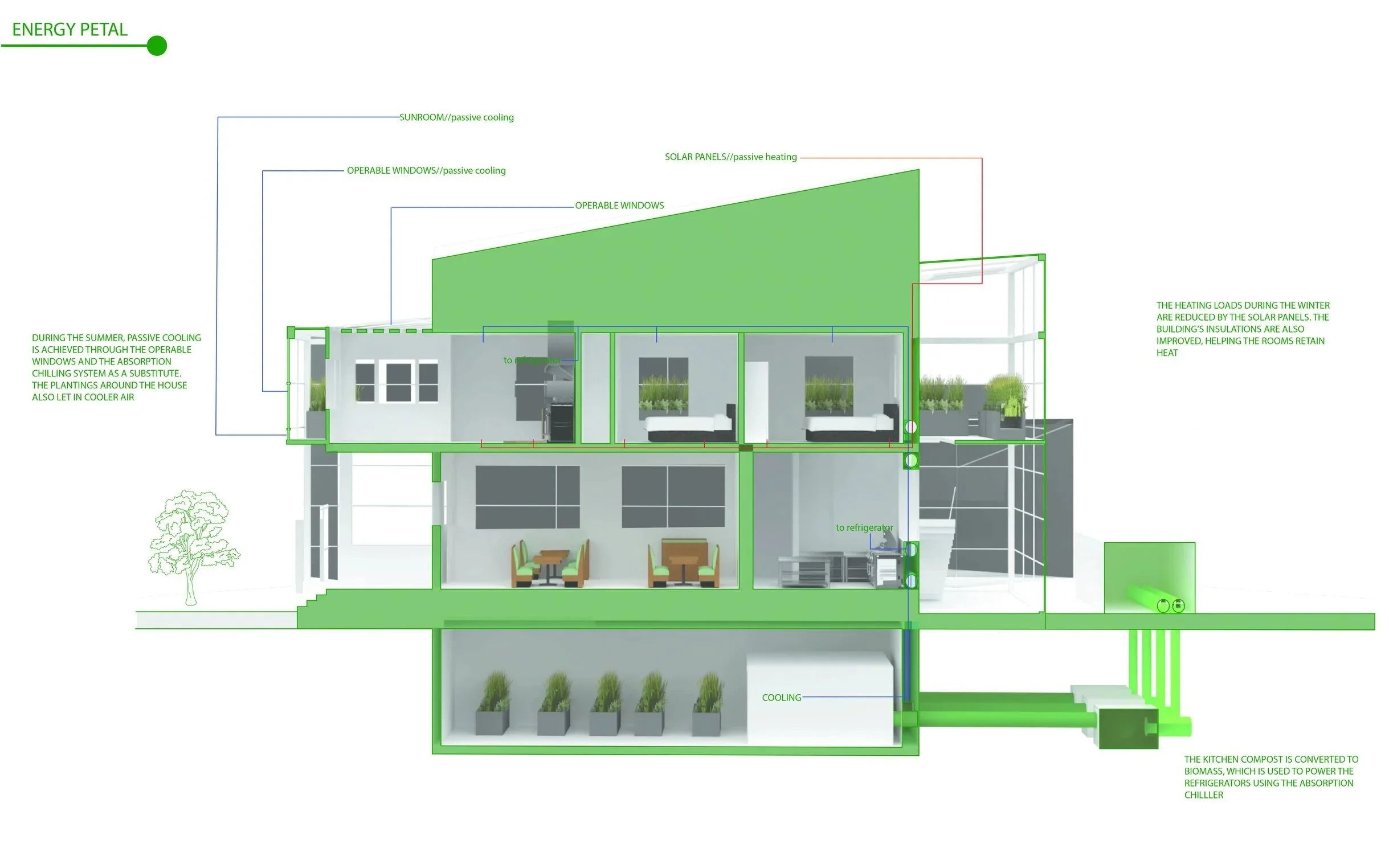
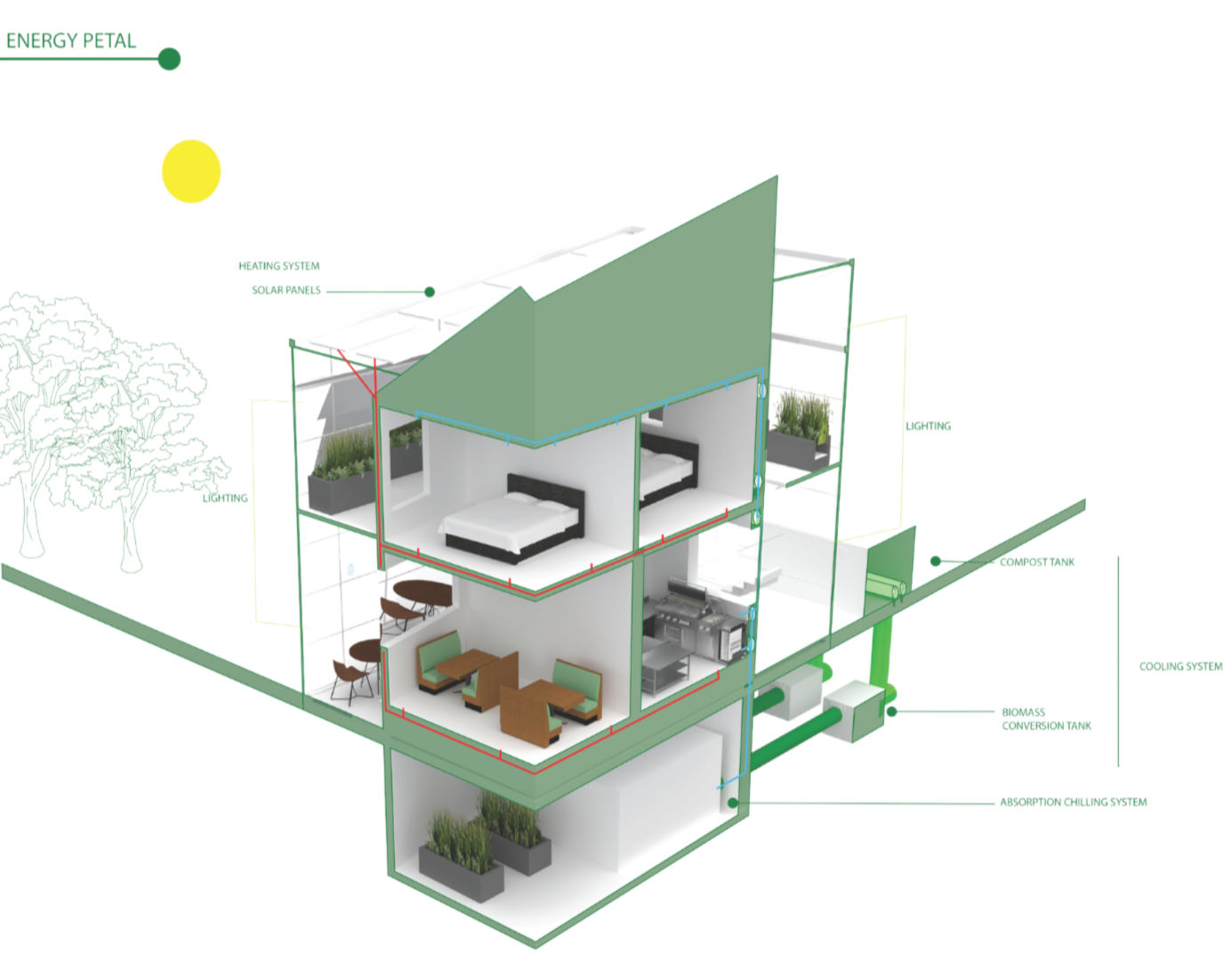
This co-op was designed as a closed-loop system that attempted to simultaneously address food, energy, and economic needs. Mushrooms harvested here had the ability to provide nourishment to patrons, be used as insulation and supplies, contribute to soil carbon stock, and degrade pollutants from the surrounding environment.
Instructors Mae-Ling Lokko
Partners Uche Ojieh, Linh Mai, Sarannya Sharma