Knowledge Sharing Spaces
paper, fall 2025
In this course, I explored the complexities of Indigenous architecture in the United States, not only as a study of historical and cultural influence on the built environment but also as a reflection of Indigenous sovereignty, articulated through spatial design. Amplifying Indigenous voices and viewpoints in the practice of “knowledge sharing spaces” revealed new depth and layers to architecture that was primed for informed analysis and discussion.
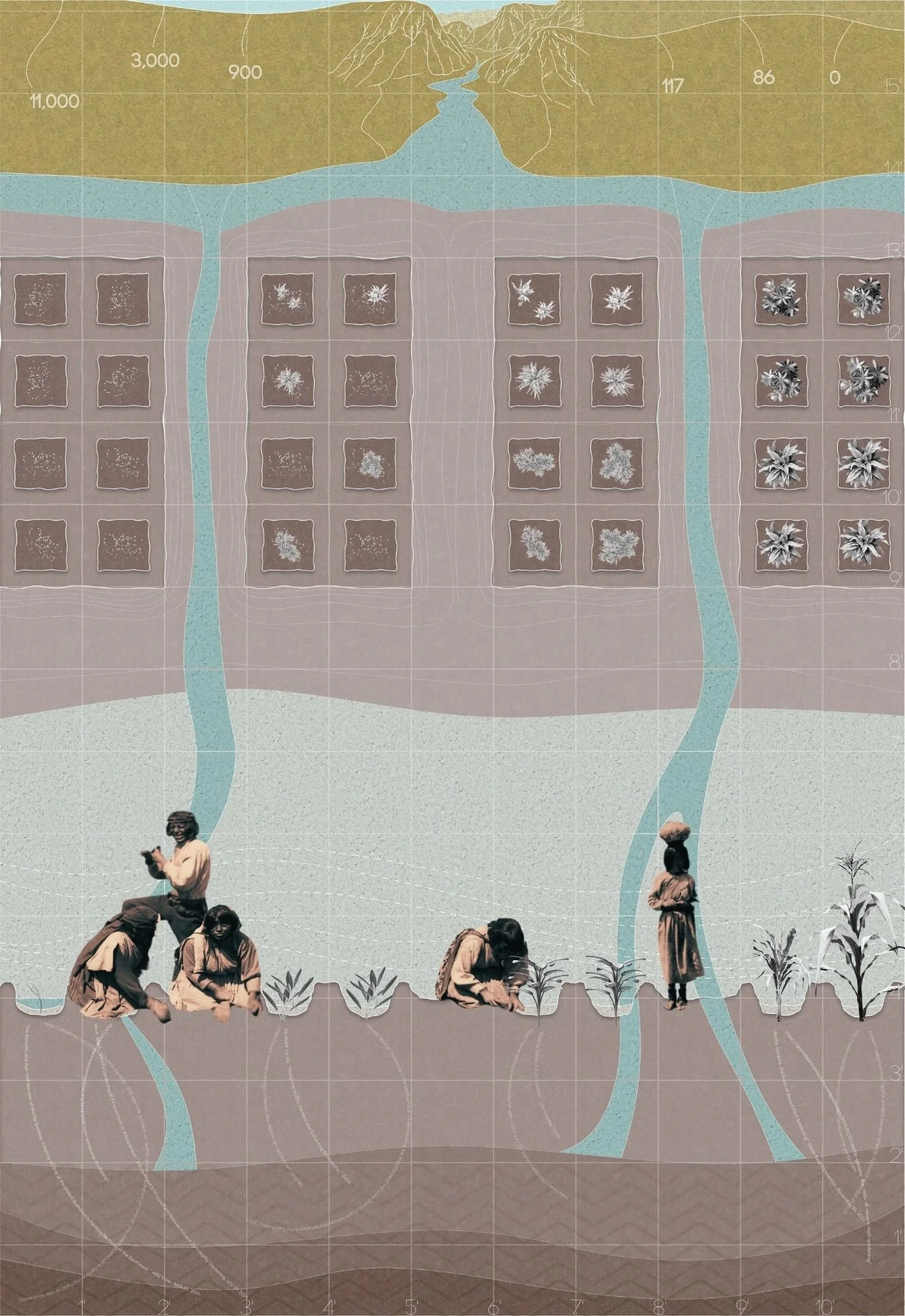
My final paper and drawing investigate Zuni Pueblo “waffle gardening.” This ancient tradition has made a comeback in recent years, helping farmers grow food in arid, drought-prone areas in New Mexico. This technique provides a nurturing microclimate for plants, housing them within clay-heavy walls. These gardens essentially replicate the services adobe homes provide to desert-dwelling humans at a smaller scale – the clay absorbs heat during the day and radiates warmth during the nights, regulating the temperature and retaining moisture so that the plants can grow.
Science and symbolism go hand-in-hand; this sacred practice runs on a ritual of clearing land, burying turquoise in the garden’s corner (imbuing it with strength), and dividing the dirt into squares. Waffle gardening is a didactic tool, cultivating ecological knowledge and preserving heritage. The gridded landscape facilitates reconnection with native language and fosters a sense of community, encouraging multiple generations of Zuni to communicate by farming together. While it may not be an example of institutional architecture, waffle gardens are a communal gathering space that promotes both cultural exchange and biodiversity.
Instructor Summer Sutton Adlparvar